Do you grow apples, pecans, or nursery crops?
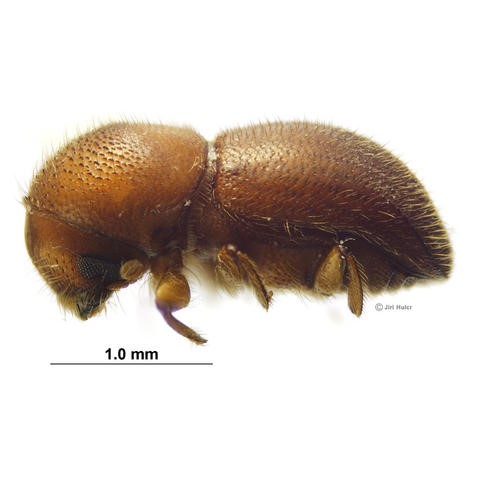
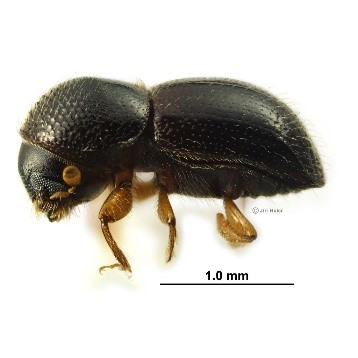
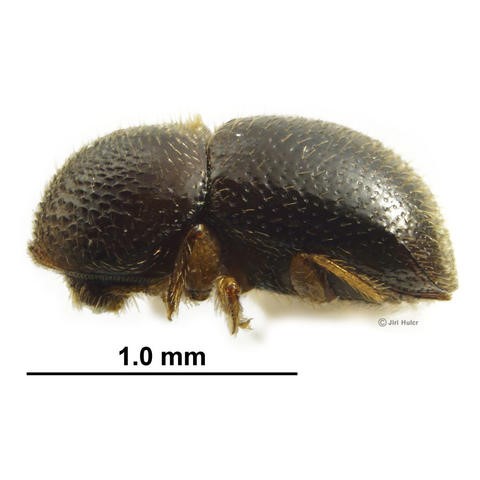
Ambrosia beetles (Xylosandrus spp.) are insect pests of young trees in woody ornamental nurseries and orchards of tree nuts and fruit crops. Three species of ambrosia beetles have been observed from trapping efforts in multiple pecan orchards in Georgia: granulate ambrosia beetle (Xylosandrus crassiusculus), black stem borer (Xylosandrus germanus), and black twig borer (Xylosandrus compactus). Among these beetle species, both granulate ambrosia beetle (GAB) and black stem borer (BSB) attack stressed trees, whereas black twig borer attacks healthy trees. Ambrosia beetles do not feed on the plant tissues; instead, they excavate a network of tunnels which cut through the heartwood and impair the movement of fluids in the plant and reduce structural health of the infested tree. In most cases, ambrosia beetle attacks have been found on stressed trees, following the stressed trees’ release of excess ethanol compared to healthy trees.
Ambrosia beetles have a unique lifecycle. Before winter, adult male and female beetles mate inside the tunnel. Males in most cases die inside the tunnel while mated females overwinter inside the tunnel. In the spring, as the temperature rises, overwintering females come out and seek new trees. This spring emergence flight is important as the flying females are likely to infest a new tree. In a new tree, adult females bore holes, lay eggs and establish fungal colonies to feed the developing colony. In this process of building tunnels or galleries, the heartwood portion of the tree (xylem) experience multiple injuries and can lead to death of the tree. The three ambrosia beetle species are different in their body size; X. crassiusculus is the largest and therefore the “toothpicks” produced by this species are somewhat thicker compared the medium sized X. germanus. The small X. compactus do not produce toothpicks.
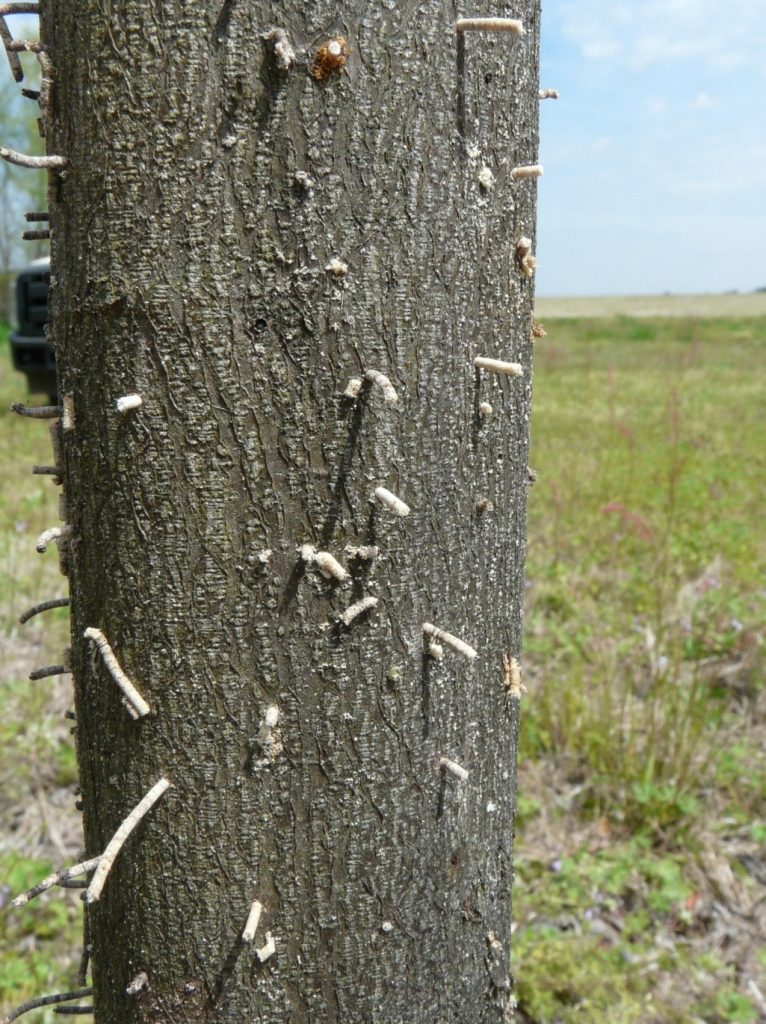
Pecan growers can expect ambrosia beetle attacks on young trees, up to 3 years old. In some instances, older trees may be attacked. However, the risk of significant injury is less as older trees can tolerate more damage. Infestation is generally evident from sawdust “toothpicks” sticking out of the tree trunk (Fig. 4). These “toothpicks” can get washed away by rain or broken due to wind, but upon close inspection of the lower part of the main trunk, origins of the “toothpicks” are visible. Infested trees may exhibit wilting of branches or die-back of terminals. Under heavy ambrosia beetle infestation, young pecan trees can die within short time period.
These Ambrosia beetles spend most of their life inside the tunnel and are only exposed during their emergence from the tunnel, especially when the mated females seek new host trees. This first flight usually takes place early in the year and is temperature dependent. Earlier trapping studies in pecan orchards of Georgia indicated this ambrosia beetle flight could be from mid-February to May. Research conducted in different production systems across Georgia indicated that ambrosia beetle flight activity is expected when the weekly average temperature is 59 ℉ or above. Therefore, monitoring the temperature is critical to know when beetle activity may begin and gauging potential risk of their attack.
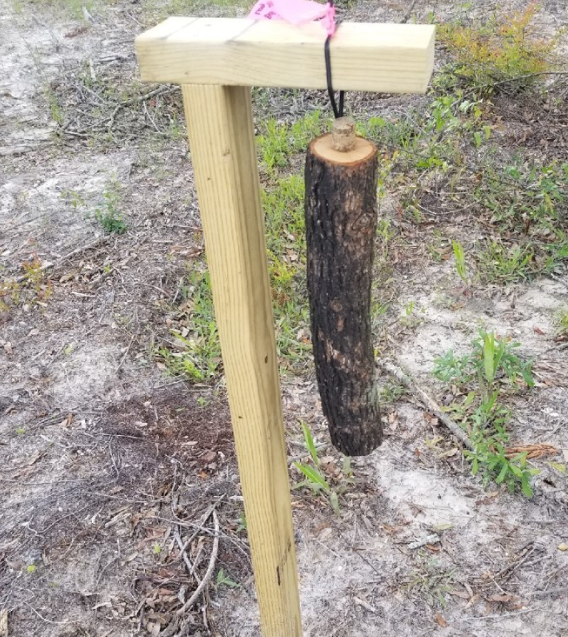
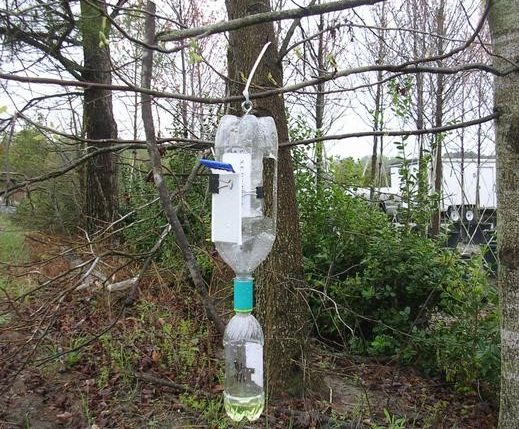
Pecan growers have been using locally made ethanol infused wood bolt traps (Fig. 5) to monitor Ambrosia beetles in their pecan orchards. There is also a commercially available ethanol lure (AgBio Inc., Westminster, CO) to use in bottle traps (Fig. 6). These ethanol pouches are easy to use with bottle traps and can last up to 8 weeks without replacing the lure.
Previous studies have indicated that season-long ambrosia beetle activity in pecan orchards could start in early February and continue until late September. However, the peak activity of females flying into new host appears to be during the month of April and May. This could vary depending on the temperature and host plants where beetles develop their colonies.
Ambrosia beetles are not a new pest occurrence in pecan orchards. These insects have gained importance as the acreage of newly planted pecan trees has increased in recent years due to rapidly expanding pecan production and replanting following natural disasters. Attacks by ambrosia beetles, especially granulate ambrosia and black stem borer beetles, typically target stressed, young pecan trees. Predictably, trees planted bare root in winter will experience stress as they leaf out in the spring before they have developed an adequate root system. Tree stress could also be due to unfavorable conditions in the rootzone due to drought or waterlogged conditions. Other injury to the plant such as frost or any mechanical damage could be factors influencing attack. Therefore, addressing any stress situation in the field as soon as possible is the best way to avoid infestation of ambrosia beetles. Use of insecticide such as pyrethroids could reduce the risk of infestation, but it is more of a preventative approach than curative control as applied insecticides including any systemic ones are unlikely to reach the beetles inside the tunnel. Some of the general practices to manage ambrosia beetles in pecan orchards are:
Written by: Apurba Barman (Co-PI, UGA Entomology), Ted Cottrell (USDA-ARS – Byron, GA), Will Hudson (Co-PI, UGA Entomology), and Andrew Sawyer (Stakeholder Advisory Panel member, UGA Extension)