Do you grow apples, pecans, or nursery crops?
Exotic ambrosia beetles are destructive wood-boring beetles that infest horticultural tree crops, including tree fruits (i.e., apples), tree nuts (i.e., pecans), and ornamental nursery trees (i.e., shade and flowering).
Ambrosia beetle infestations are a major source of revenue losses in these three commodity groups.
Unlike other wood-boring insects, ABs burrow deep into trees to create galleries for growing fungi that serves as their sole source of nutrition. ABs do not feed on trees.
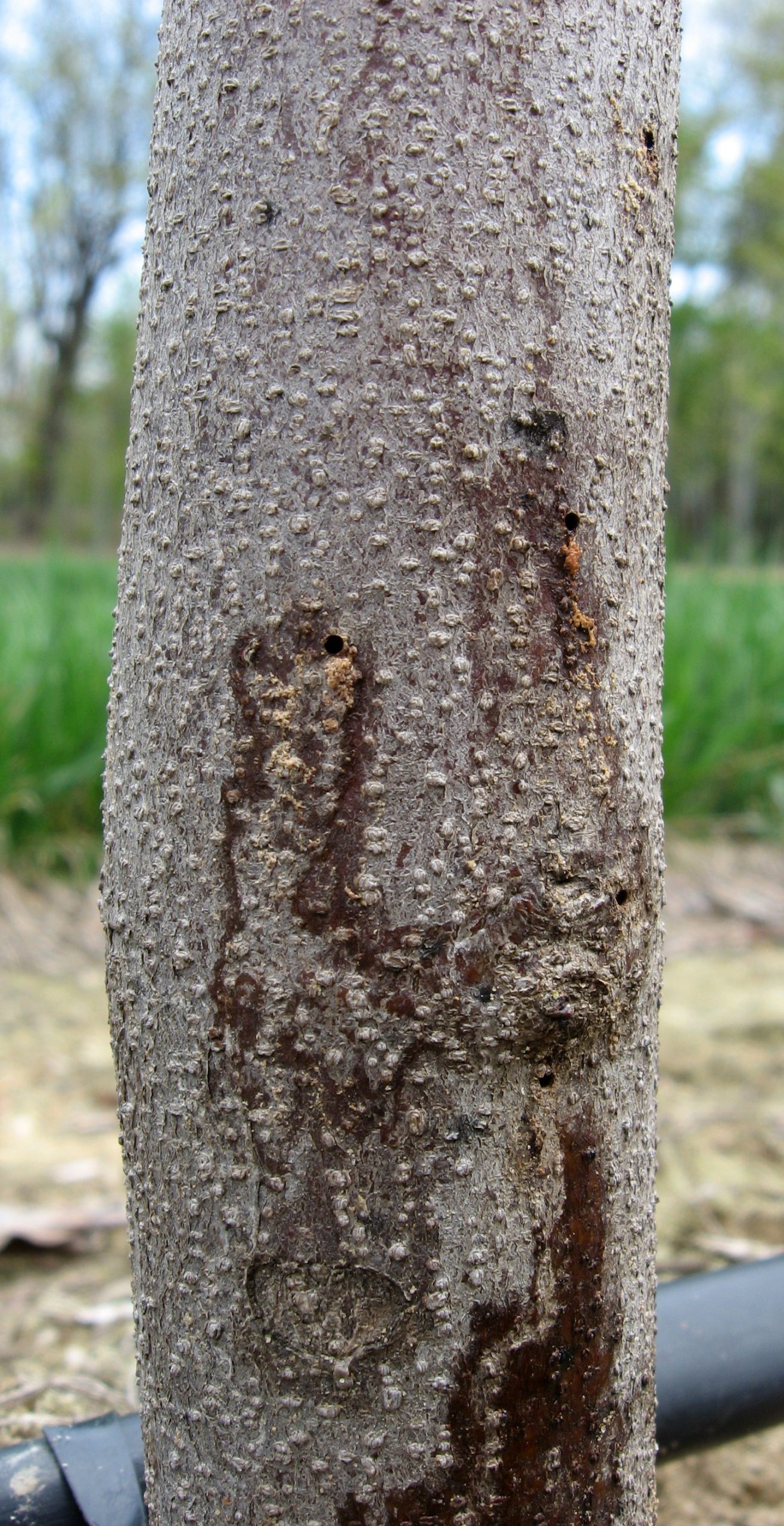
Burrowing results in perforated stems, oozing sap, bark staining, branch dieback, and rapid tree death. Infestations can render trees unmarketable, decrease the integrity of surviving trees, and make trees vulnerable to infection.
Two exotic species are especially problematic in horticultural tree crops: granulate ambrosia beetle (GAB), which has the scientific name Xylosandrus crassiusculus, and black stem borer (BSB), scientific name Xylosandrus germanus. BSB and GAB are established in 32 and 29 states, respectively, mainly in the eastern U.S. In the U.S., BSB tends to be more abundant and problematic in the Midwest and the Northeast; GAB dominates the mid-Atlantic and the South.
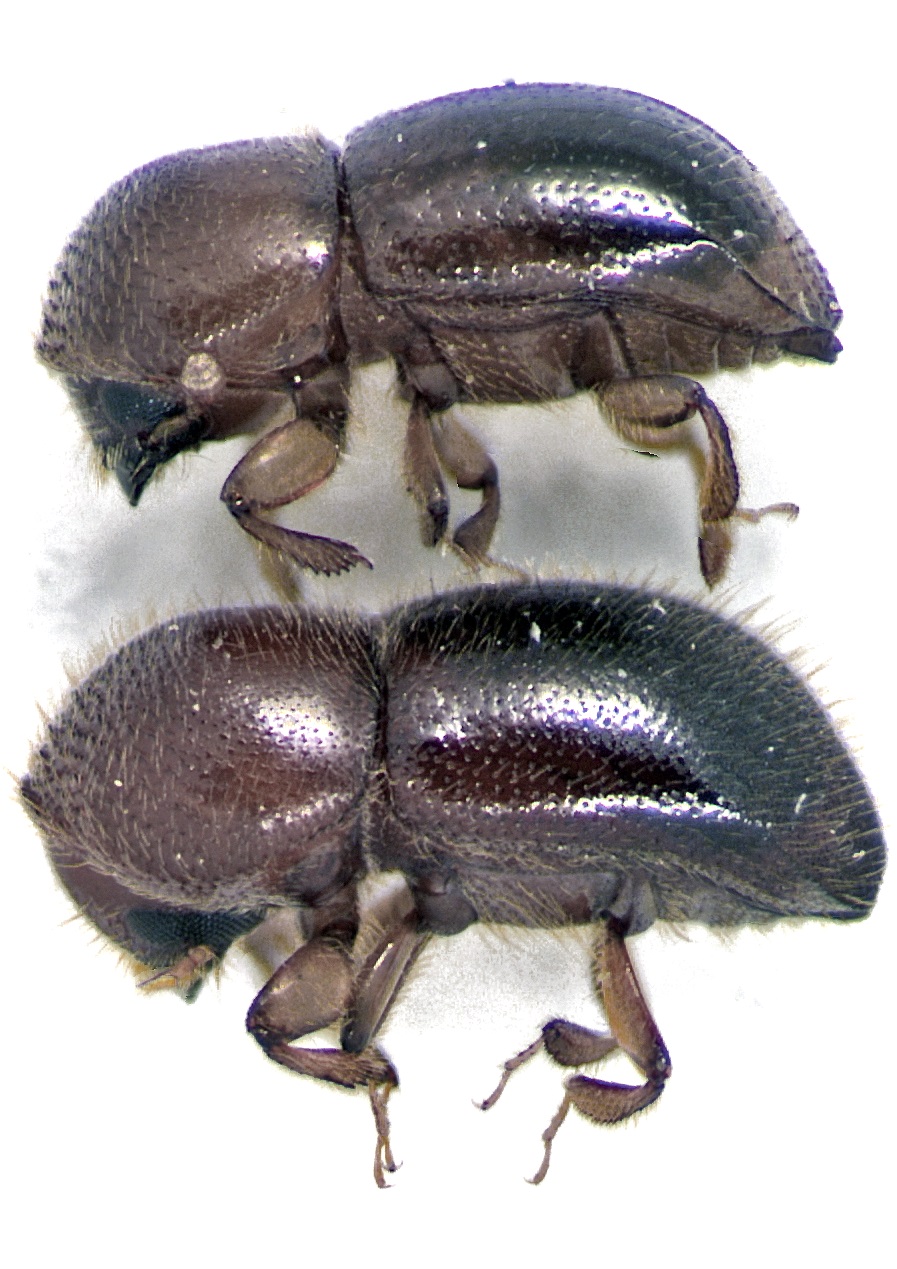
Female granulate ambrosia beetles are reddish-brown, stout and squat, rounded in front and rear from a dorsal (back/top) view. The head is largely hidden under a prominent pronotum, the round, plate-like structure covering the dorsal surface. Females are about 3.0 mm in length and are about 1.2 mm wide.
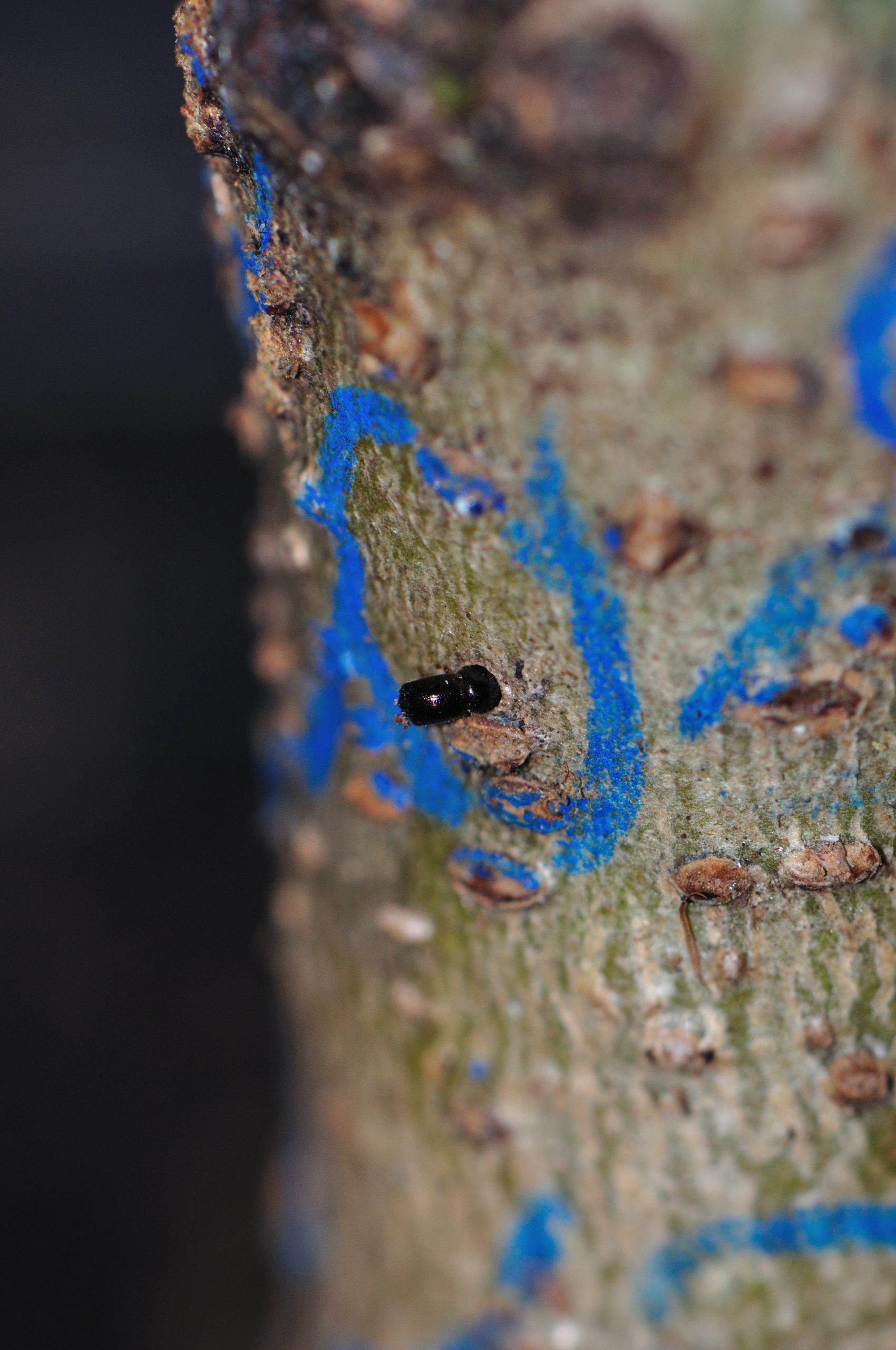
Female black stem borers are dark brown to black, shiny, stout, rounded in front and rear, and with the head similarly hidden under a prominent pronotum. Females are 2.0-2.5 mm in length and are about 1.0 mm wide.
Male GAB and BSB generally resemble the females but are considerably smaller in size. Males are also flightless and not important for monitoring.
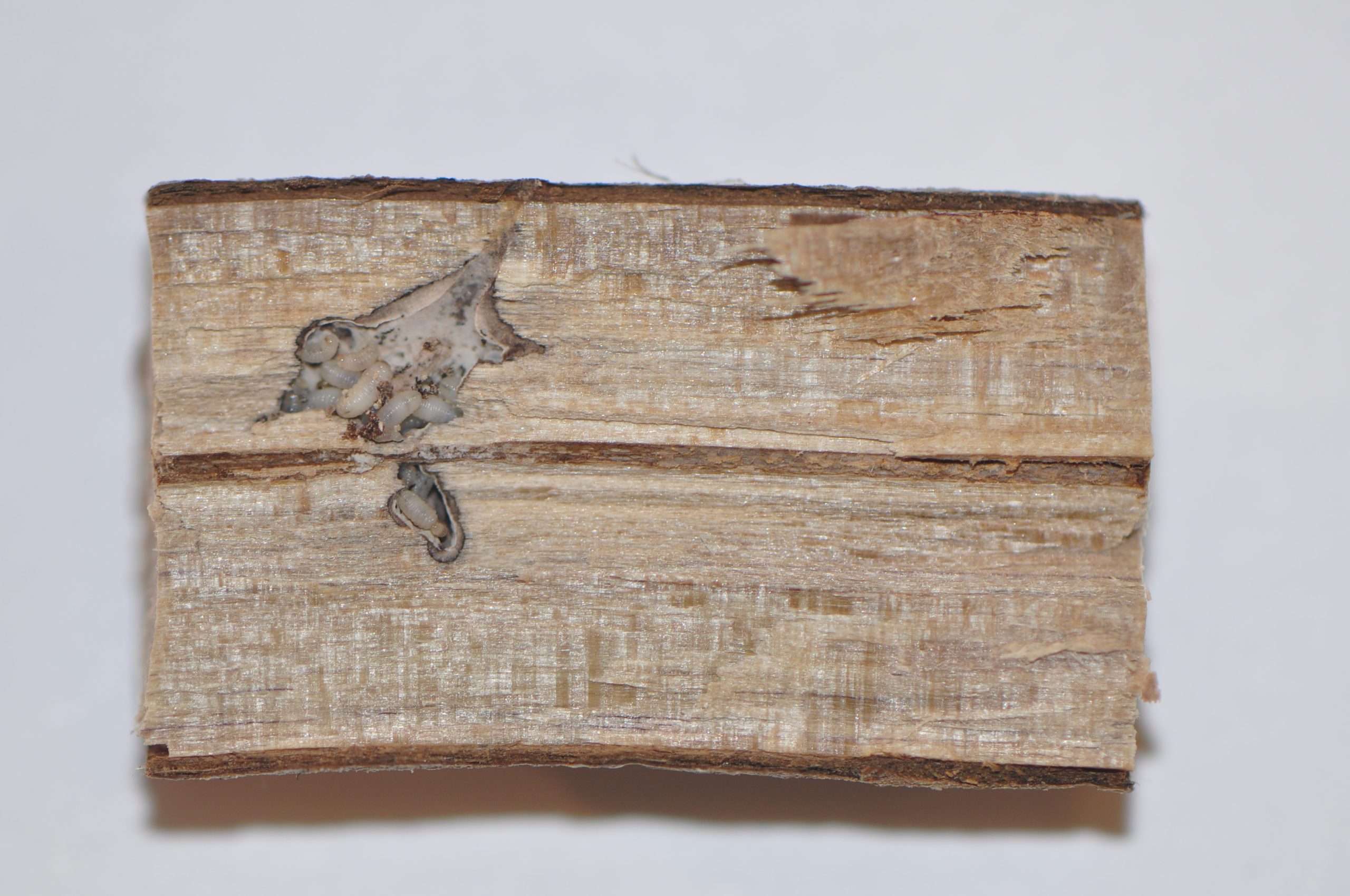
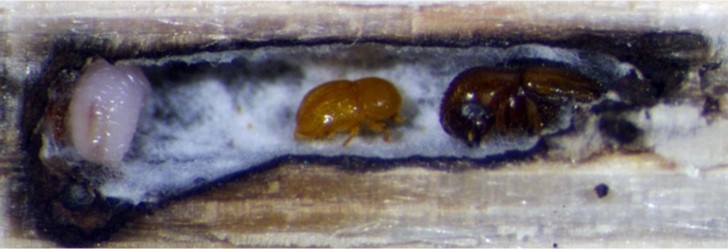
Dissecting infested stems can reveal the presence of GAB and BSB eggs, larvae, and pupae within the galleries that serve as the ambrosia beetles’ homes.
GAB and BSB overwinter as adults within their host tree galleries. First flight of GAB and BSB occurs in March to April in Illinois, Missouri, North Carolina, Ohio, Tennessee, and Virginia. First flight of GAB occurs in February to March in South Carolina, Mississippi, and Florida. Two to three generations per year occur for GAB and BSB depending on latitude.
Both the GAB and BSB infest over 100 species of woody plants and trees. While deciduous and coniferous species are attacked, reports from ornamental plant nurseries generally involve thin-barked deciduous species. Dogwood (Cornus spp.), honeylocust (Gleditsia triacanthos L.), Japanese snowbell (Styrax japonicus S. et Z.), magnolia (Magnolia spp.), maple (Acer spp.), oak (Quercus spp.), and redbud (Cercis spp.) are among the more commonly infested species in ornamental nurseries. Apple, peach, and pecan trees are also infested by BSB and GAB.
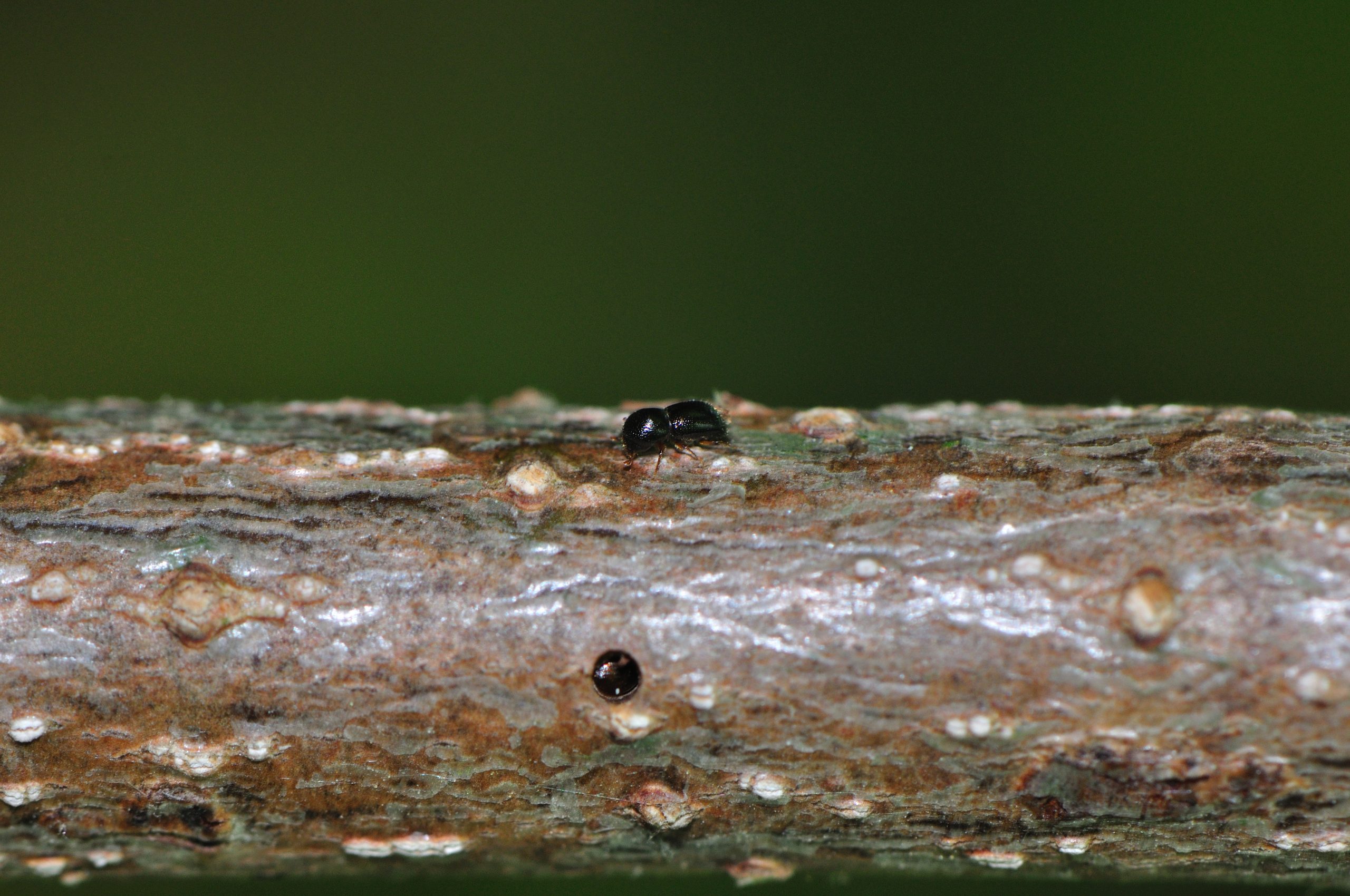
Adult females tunnel into the stems, branches, and sometimes the exposed roots of trees. Tunnels widen into brood chambers. Infestations can sometimes be difficult to detect due to the small diameter of the tunnel entrance.
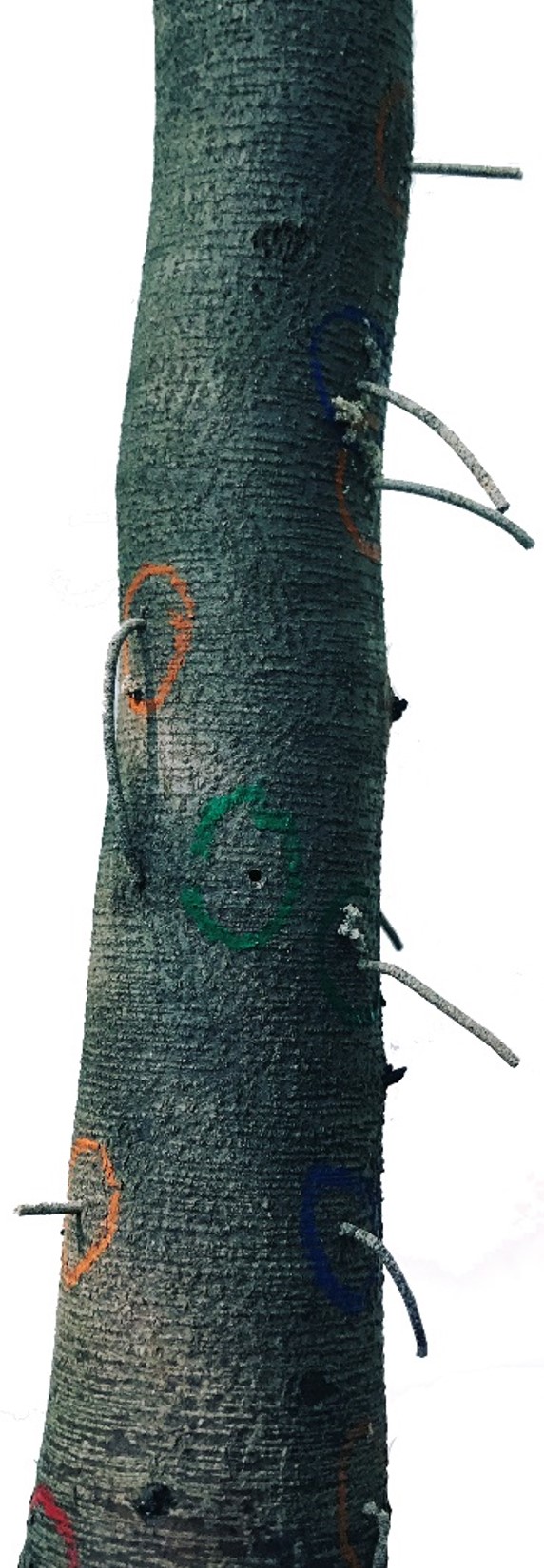
An easier-to-spot characteristic symptom of tunneling by BSB, GAB, and other ambrosia beetles are “noodles” of chewed wood projecting up to 3‒4 cm out from the stems. Sap stains on the bark is also a key symptom and is most frequently observed in spring. Plants can exhibit rapidly wilting foliage and branch dieback after being infested by GAB and BSB, especially during spring months.