Do you grow apples, pecans, or nursery crops?
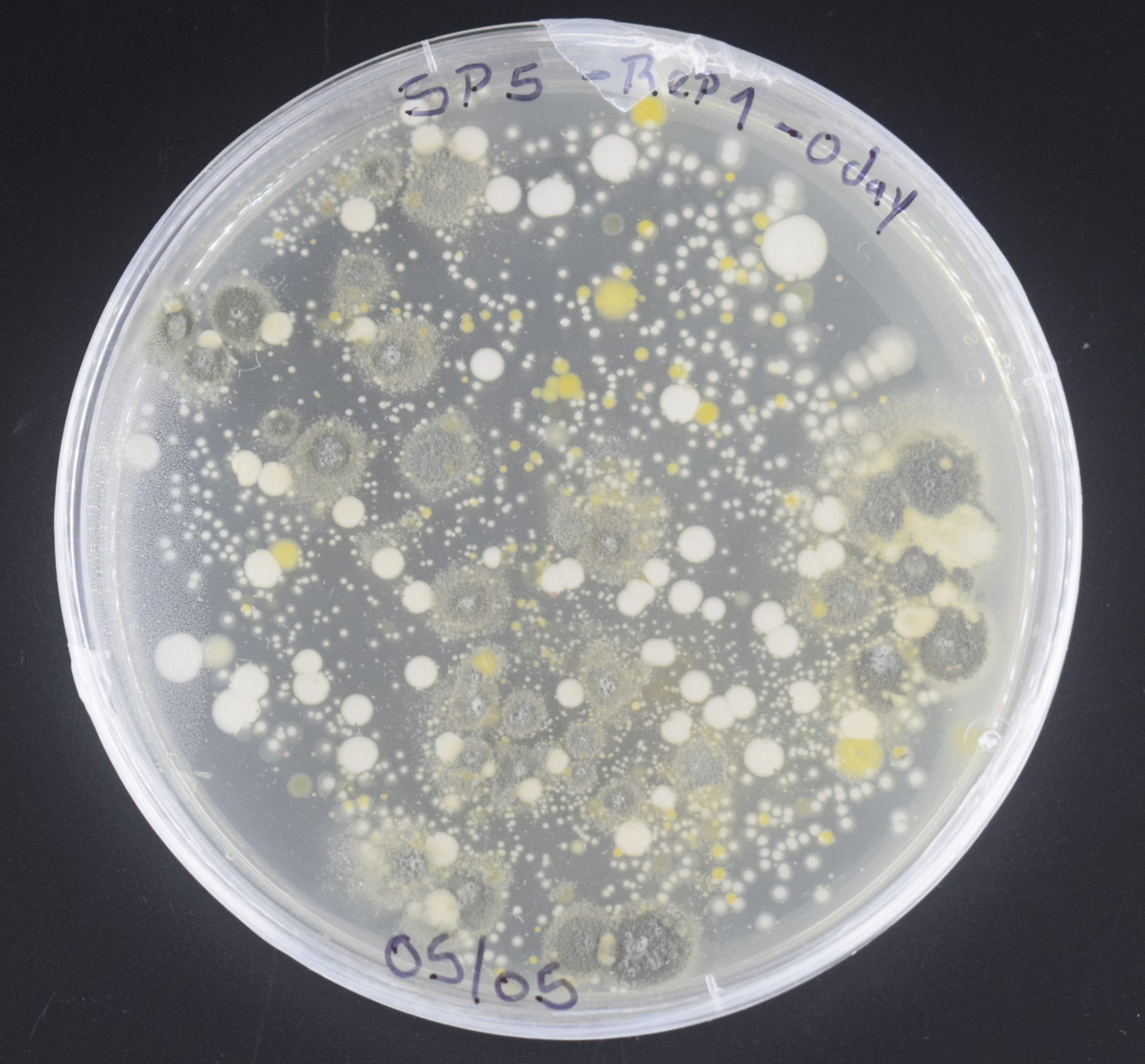
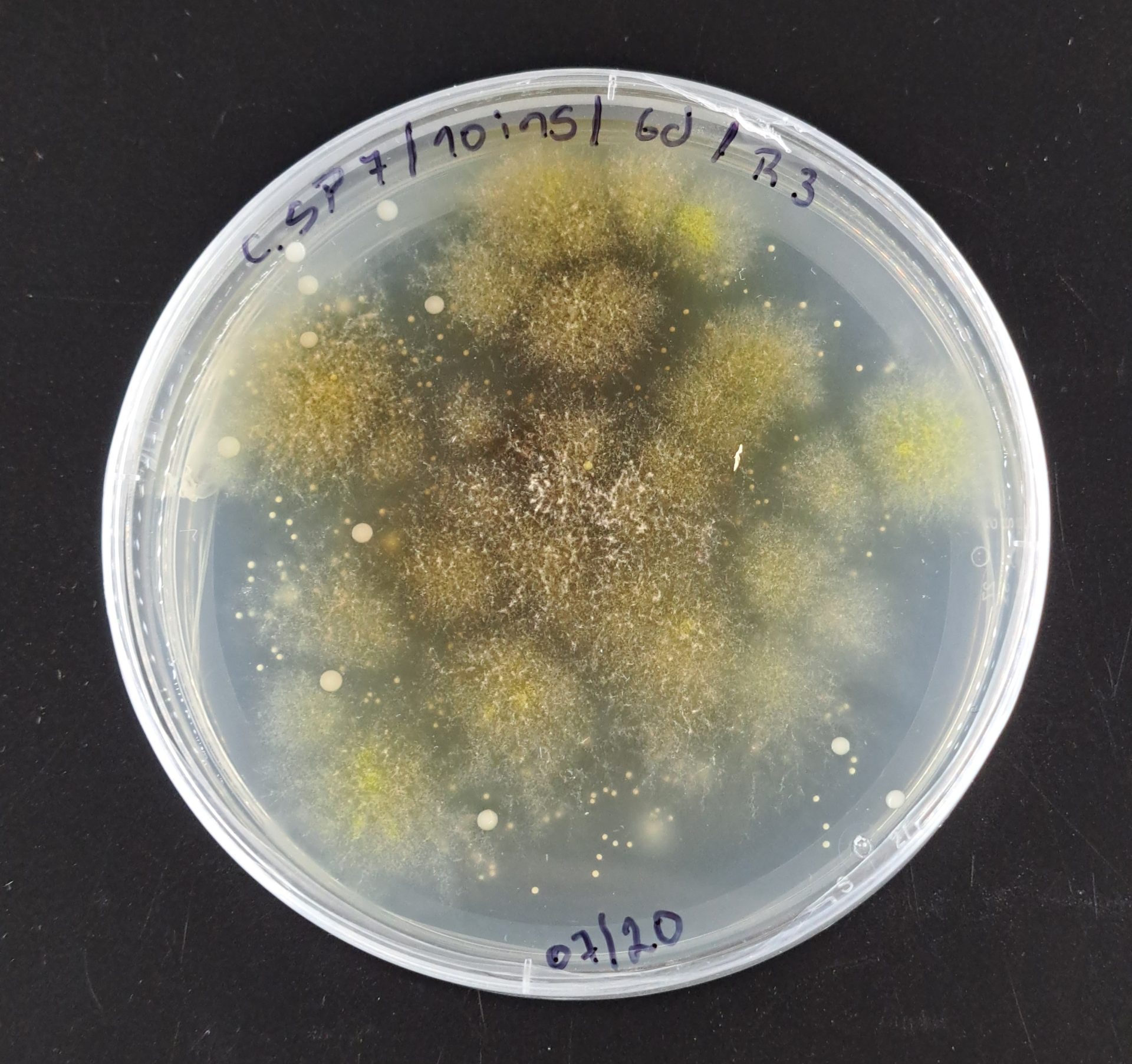
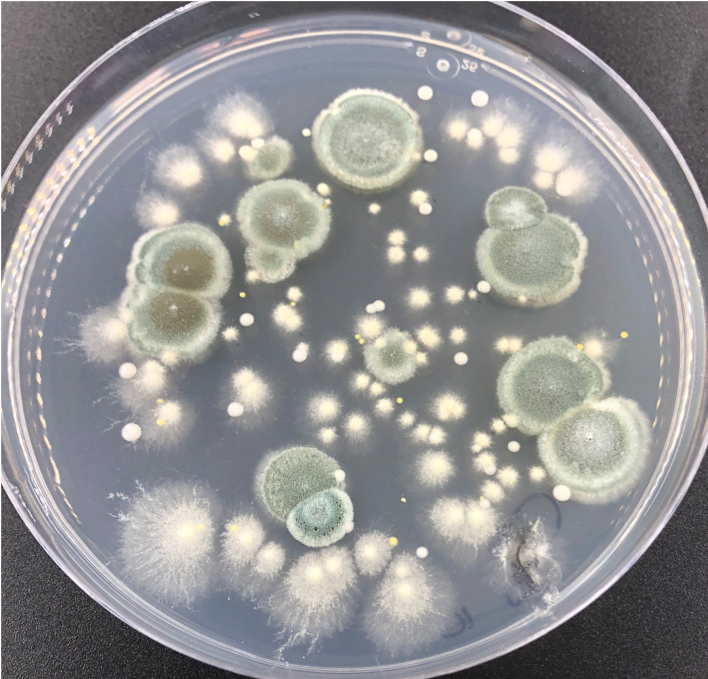
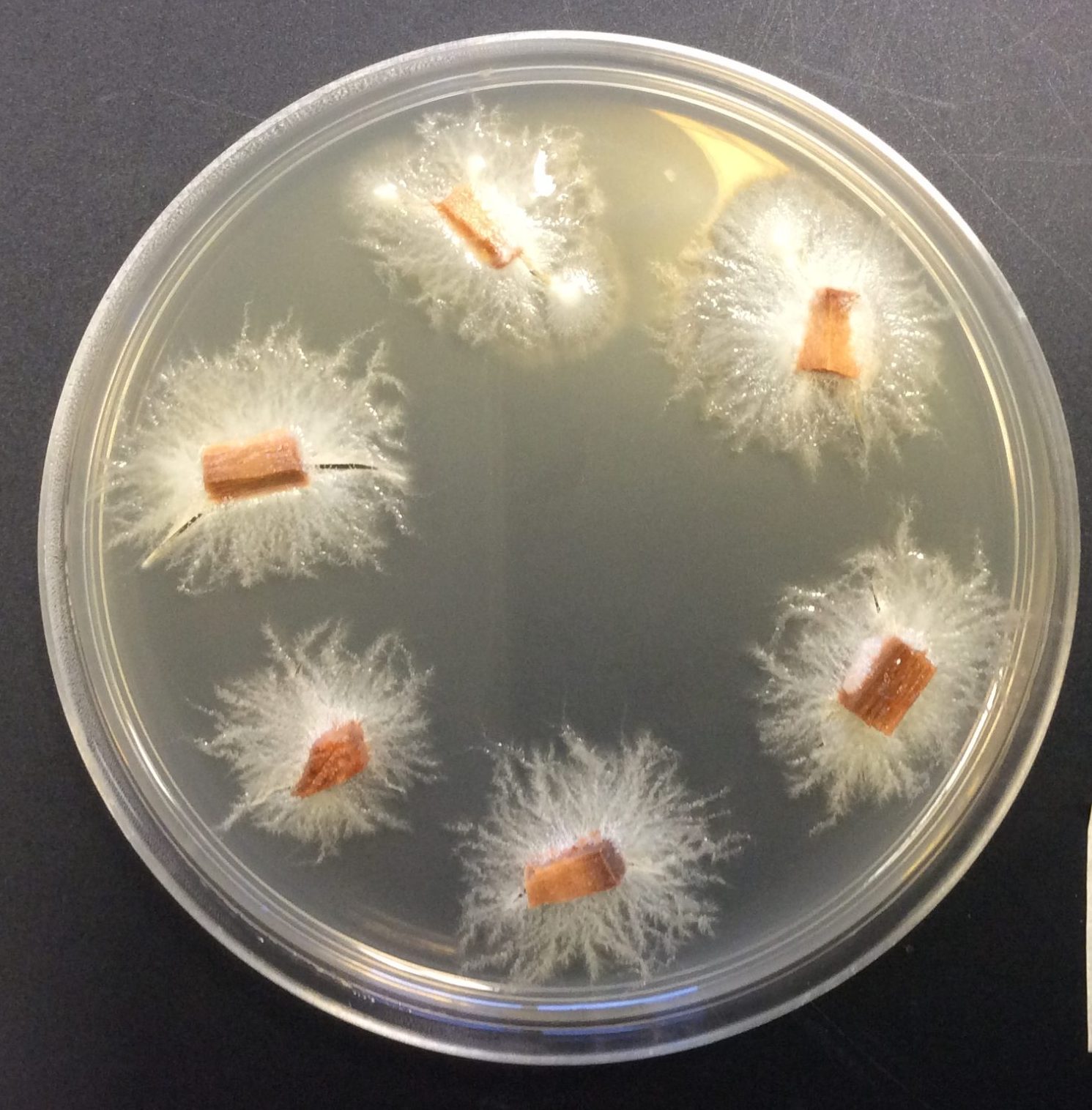
Ambrosia fungi are types of fungus that have a mutually beneficial relationship, called symbiosis, with ambrosia beetles. The beetles provide protection and transportation to the fungi, while the fungi provide essential nutrients for the beetles to survive and reproduce. Fungal symbionts (sometimes called nutritional symbionts) are moved in specialized structures or “pockets” in the beetle’s body, known as mycangia. Depending on the beetle species, these structures can be located on the mandibles, thorax, or the elytra.
Once the female beetle finds a suitable tree, it bores into the woody stem and into the sapwood. This establishes a main gallery and a brood gallery, where the eggs will be laid. As the beetle bores into the sapwood, it inoculates the walls with the fungal symbiont(s), establishing a “fungal garden.” The fungal garden feeds the adults and the brood.
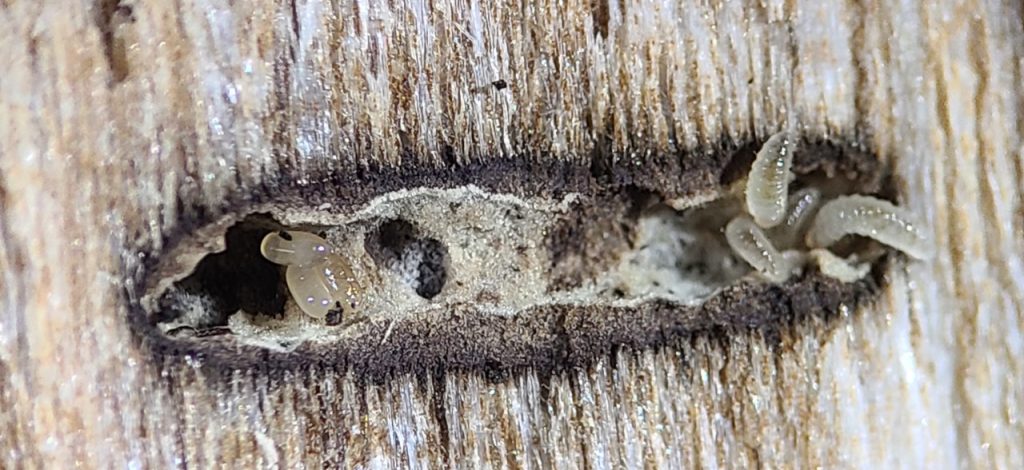
Traditionally, ambrosia beetles have been associated with a single predominant symbiont, but recent studies have demonstrated that more than one fungal species may cohabit within a single beetle’s mycangia, or fungus “pocket.” Moreover, multiple instances have been reported of symbionts switching or sharing vectors, which is believed to be part of facilitating the invasion of species into new habitats and colonizing new hosts.
The primary nutritional symbionts of ambrosia beetles are those that are consistently isolated from the mycangia of adult females collected after flight, from females excavating their new brood galleries, or from brood galleries in the presence of actively feeding larvae. Most of those fungi are in the Ophiostomatales (Pezizomycotina: Ascomycetes) and include genera such as Raffaelea, Harringtonia, Ambrosiella, Ophiostoma, and Ceratocystis. Recently, Fusarium has been documented as symbionts of ambrosia beetles in the genus Euwallacea.
Most beetle-fungus symbiosis systems do not represent a threat to ecosystems; however, a few beetles are able to inoculate their pathogenic fungal symbionts into healthy plants, causing branch dieback and tree death. Two significant examples are Laurel Wilt and Fusarium Branch Dieback. The fungal symbionts of BSB and GAB are not considered pathogens, but SCRI researchers are unraveling the role these symbionts play in branch dieback and tree death.