Do you grow apples, pecans, or nursery crops?
Ambrosia beetles damage ornamental trees and shrubs through structural damage, via boring and tunneling, and more importantly, through introduction of the ambrosia fungi. The fungi clog the vascular tissues, eventually leading to tree death. Some well-established landscape trees survive the attacks but trees in nurseries often die.
Attack symptoms include 2-mm (a little smaller than a pencil’s lead) round entry holes in the trunk and toothpick-like strands of boring dust sometimes protrude from these holes. The bark can be stained once the sap dries. These symptoms can be used for pest diagnosis.
The symptoms appear immediately after attacks in both wholesale and retail nurseries and garden centers. Over time, the attacked trees are often slow in leafing out and the foliage may appear chlorotic. Eventually, the trees die in about one month after the attack.
Ambrosia beetles as a group attack more than 150 different broadleaf plants species. Redbud, dogwood, flowering cherry, Styrax, Chinese elm, crape myrtle, golden rain tree, magnolia, maple, pear and tulip poplar are the most frequently attacked species.
It is already too late to save the trees by the time attack symptoms are observed. That’s because the deadly ambrosia fungi have already entered the trees. Management of ambrosia beetles should begin before adult flight to prevent attacks in the spring.
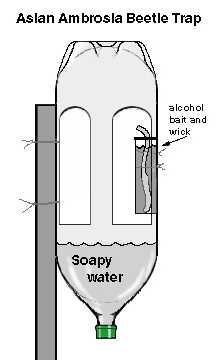
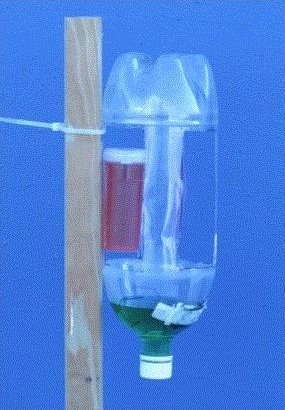
A homemade soda bottle trap can be used to monitor adult flight. Cut windows from a 2-liter soda bottle and hang from a pole or tree along the tree line. Bait the trap with ethanol (either liquid or in a commercial pouch) as shown. Hang the trap in early March. Refill the pill bottle with alcohol and check the trap weekly. Begin preventative treatment when the first beetle is captured in the killing agent.
The trap is baited with ethanol and a wick (dyed red, right) in a pill bottle. The beetles are killed in soapy water or antifreeze (dyed green in the bottom, right).